We’ve all been there. You’re driving down Aliso Creek Road, the sun is hitting the hills just right, and suddenly, skreeeee. That high-pitched squeal from your wheels isn’t just annoying; it’s your car’s way of tapping you on the shoulder and saying, “Hey, we need to talk.”
When it comes to brake repair, Aliso Viejo drivers often find themselves at a crossroads. Do you try to stretch those pads another thousand miles? Do you take it to a big-box chain, or do you try a DIY weekend project? At Aliso Viejo Auto Service, we see the aftermath of these decisions every day. We believe in being honest with our neighbors: brakes are the single most important safety feature on your vehicle.
Unfortunately, there are some very common mistakes that turn a simple pad replacement into a multi-thousand-dollar headache. Here are the seven biggest mistakes we see and, more importantly, how you can avoid them to keep your family safe and your wallet full.
1. Letting the Caliper “Hang Out” (Literally)
If you’ve ever watched a YouTube video on DIY brake repair, you might see someone pop the brake caliper off and just let it dangle by the rubber hose while they swap the rotors. This is a massive “no-no.”
That rubber hose is the lifeline of your braking system. It carries the pressurized fluid that allows you to stop. It was never designed to hold the weight of a heavy metal caliper. When it hangs, the internal lining of the hose can tear or stretch. You might not see the damage immediately, but it can lead to a collapsed hose later, causing your brakes to “stick” or fail entirely.
The Fix: Always use a “S” hook or a simple piece of heavy wire to hang the caliper from the suspension frame. It takes five seconds and saves you the cost of replacing damaged brake lines.
2. Putting New Parts on “Dirty” Foundations
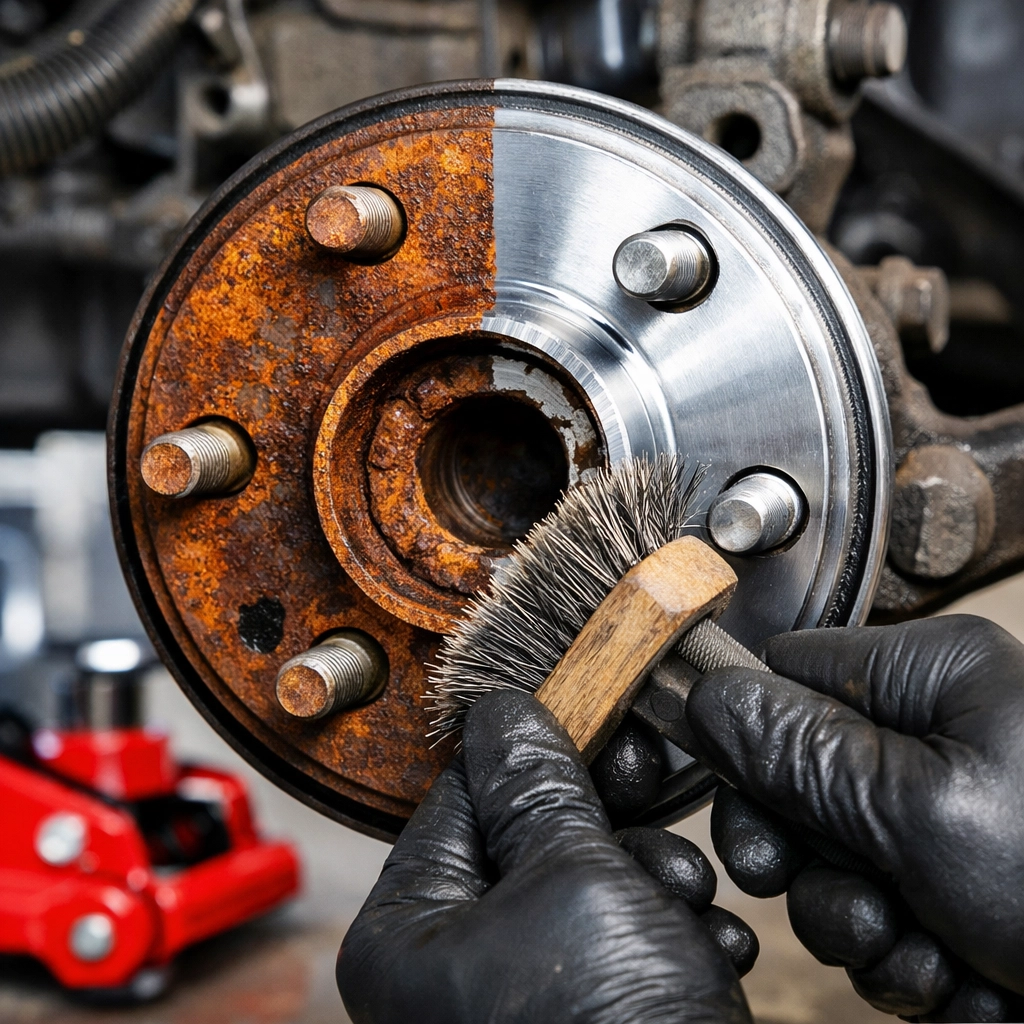
Imagine buying a brand-new pair of expensive Italian leather shoes and putting them on over muddy, wet socks. That’s essentially what happens when someone installs a new brake disc (rotor) onto a corroded wheel hub.
Over time, moisture and salt cause rust to build up on the hub: the metal surface the rotor sits against. If that surface isn’t perfectly flat and clean, your new rotor will sit at a tiny, microscopic angle. This leads to “runout,” which you’ll feel as a pulsating vibration in your steering wheel every time you hit the brakes.
The Fix: Before the new parts go on, we use a wire brush or specialized cleaning tool to get that hub back to a shiny, smooth surface. It’s the difference between a smooth stop and a shaky one.
3. Skipping the “Deep Clean”
Brakes are a dirty business. Every time you stop, a little bit of dust is shaved off the pads. Over 20,000 miles, that dust, combined with road grime, creates a thick paste that jams up the moving parts of your brakes.
If you just “slap” new pads in without cleaning the metal tracks (the clips the pads slide into), the pads can get stuck. This causes them to stay pressed against the rotor even when you’re not braking, which smells like something is burning and wears your new pads down in a matter of weeks.
The Fix: We don’t just swap parts; we perform a full service. This includes using specialized brake cleaner to strip away the grit and ensuring the pads can move freely. If you’re curious about other signs of trouble, check out our guide on top signs you need auto repair in Aliso Viejo.
4. Neglecting the “Joints” (Caliper Guide Pins)
Your brake calipers are designed to “float” or slide back and forth. This movement happens on small metal pins called guide pins. These pins need high-temperature lubricant to stay slippery.
One of the most common mistakes in brake repair Aliso Viejo shops see is dry or seized guide pins. When the grease dries up or gets contaminated with water, the pins lock up. This results in uneven wear: where one pad looks brand new and the other is worn down to the metal.
The Fix: Every single brake job should involve removing these pins, cleaning off the old, crusty grease, and applying fresh, high-quality synthetic brake lubricant. It’s a small step that doubles the life of your brakes.
5. Treating Brake Fluid Like It Lasts Forever
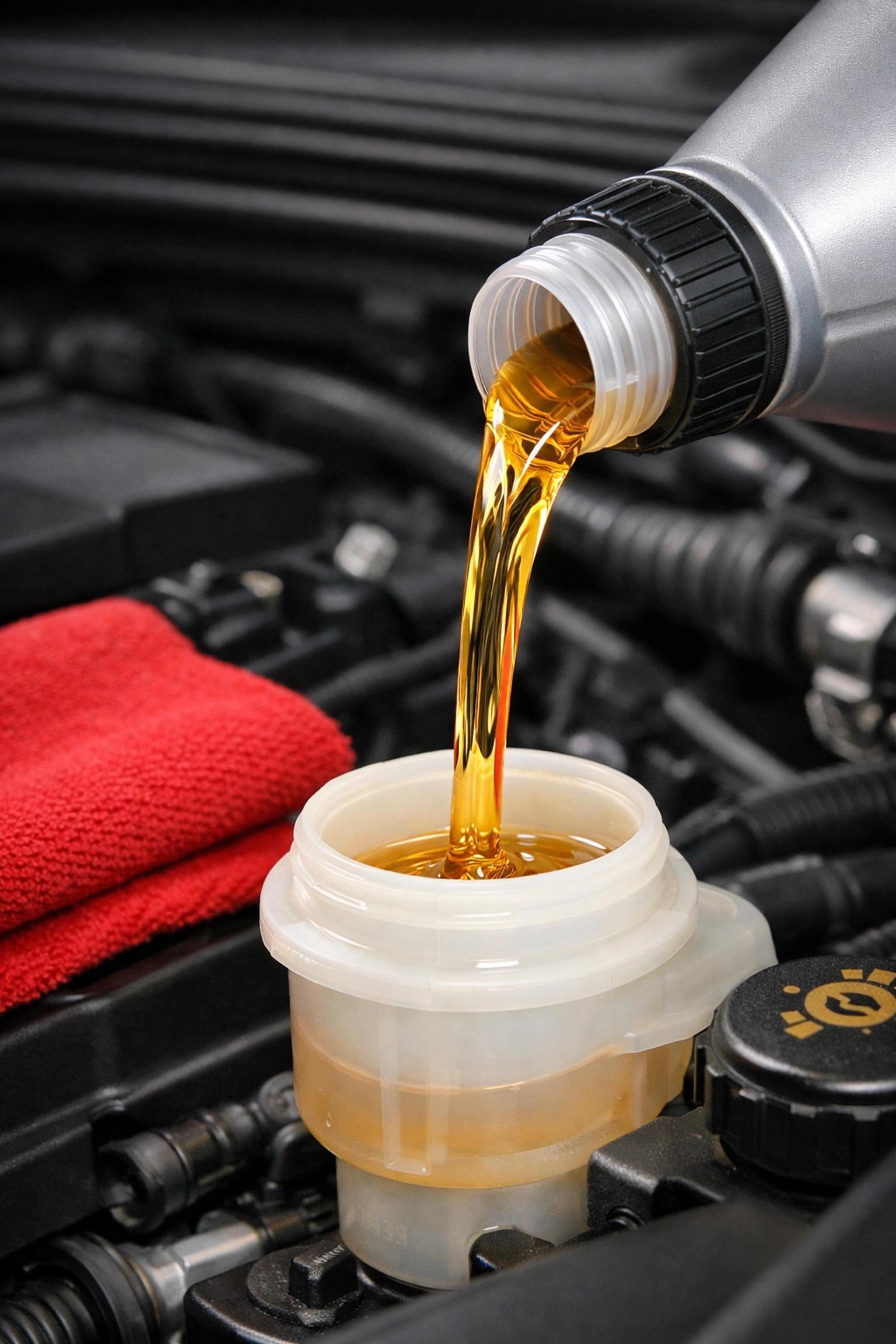
Most people know they need to change their engine oil, but brake fluid is often the “forgotten” fluid. Brake fluid is “hygroscopic,” which is a fancy way of saying it acts like a sponge for moisture.
Even in our relatively dry Aliso Viejo climate, moisture eventually finds its way into the system. This water can boil under the high heat of braking (causing a “spongy” pedal) and can rust your ABS system and master cylinder from the inside out. Replacing an ABS module is significantly more expensive than a simple fluid flush.
The Fix: We recommend a brake fluid exchange every two years or 30,000 miles. Think of it as a “detox” for your car’s veins. It keeps the pedal firm and protects those expensive internal components. This falls under the category of preventative maintenance that saves you thousands in the long run.
6. The “Wait and See” Strategy
We get it: life is busy. Between school drop-offs at Aliso Niguel High and commuting to Irvine, taking the car to the shop is a chore. Many drivers wait until they hear a terrifying grinding sound before booking an appointment.
By the time you hear grinding (metal-on-metal), you’ve likely destroyed your rotors. If you had come in when you first heard a faint squeal, we probably could have just replaced the pads and “resurfaced” the rotors, saving you the cost of buying brand-new heavy metal parts.
The Fix: Listen to your car. If the pedal feels different, if you hear a new chirp, or if your car pulls to one side when braking, bring it in for a quick look. A regular vehicle inspection is the best way to catch these issues while they are still “small” problems.
7. Mixing and Matching Cheap Parts
In the world of auto parts, you usually get what you pay for. “Economy” brake pads often use cheaper bonding agents and metal shavings that are loud, dusty, and don’t dissipate heat well. In a hilly area like Aliso Viejo, where brakes can get very hot on long descents, cheap parts can lead to “brake fade,” where the car becomes much harder to stop.
The Fix: We advocate for using Original Equipment (OE) or high-quality ceramic pads. They last longer, stay quieter, and keep your wheels cleaner. It’s an investment in your safety and the longevity of your car.
How to Identify These Problems Before They Get Costly
You don’t need to be a mechanic to know something is wrong. Your senses are your best diagnostic tools:
- Sound: Squealing is a warning. Grinding is an emergency.
- Feel: A vibration in the pedal usually means warped rotors or a dirty hub. A “spongy” pedal that sinks to the floor usually means air in the lines or old fluid.
- Smell: A sharp, chemical burning smell after a long drive often means a caliper is stuck or a pad is dragging.
- Sight: Take a look at your wheels. If one wheel is significantly covered in dark dust compared to the others, that brake is working too hard or is stuck.
Honest Service You Can Trust
At Aliso Viejo Auto Service, we treat every car like it’s our own family’s vehicle. We won’t try to sell you a full system replacement if you only need a simple adjustment, but we will always be honest about what is necessary to keep you safe on the road.
Brakes aren’t just about stopping; they are about peace of mind. Whether you’re preparing for a summer road trip or just your daily commute, ensuring your braking system is in top shape is the smartest move you can make for your car’s health.
Ready to make sure your brakes are 100%? We’re here to help make the process simple and stress-free. Check out our latest offers and let’s get your car back to that smooth, silent stop you deserve.
Drive safe, Aliso Viejo!