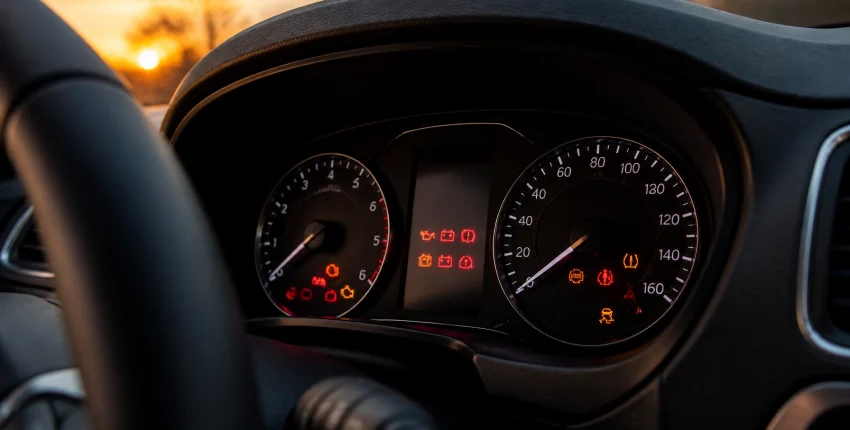
That small symbol glowing on your dashboard can be easy to dismiss, especially when your car still starts and drives normally. But dashboard warning lights are your vehicle’s way of communicating. Some are simple reminders, while others signal a problem that could affect your safety or lead to expensive damage.
You do not need to be a car expert to know what to do next. A useful rule is that red warning lights usually require immediate attention, while yellow or amber lights generally mean you should schedule service soon. Green and blue lights are often informational, showing that a system is operating.
The exact symbols vary by vehicle, so check your owner’s manual when you are unsure. In the meantime, here are 10 warning lights beyond the check engine light that you should not ignore around Aliso Viejo.
1. Oil Pressure Warning Light
The oil pressure symbol usually looks like a small red oil can. It does not simply mean that your oil level is a little low. It can indicate that the engine is not building or maintaining enough oil pressure to lubricate its internal parts.
Possible causes include:
- Low engine oil
- An oil leak
- A clogged oil passage or filter
- A failing oil pump
- Internal engine wear
If this red light comes on while you are driving, pull over safely and turn the engine off as soon as possible. Continuing to drive without proper oil pressure can cause severe engine damage in a short amount of time.
You can check the oil level after the engine has cooled and the vehicle is parked on level ground. However, adding oil does not always solve the problem. If the light remains on, arrange for professional service rather than driving farther.
2. Battery or Charging System Light
The red battery-shaped light often surprises drivers because it does not necessarily mean the battery itself has failed. More broadly, it indicates a problem with the vehicle’s charging system.
The issue could involve the:
- Alternator
- Battery
- Serpentine belt
- Battery terminals
- Wiring or electrical connections
When this light appears, your car may be using stored battery power without properly recharging it. The vehicle could continue running briefly, then stall once the battery is depleted. You may also notice dim headlights, flickering interior lights, or other electrical problems.
Avoid taking a long trip or entering heavy freeway traffic if this light stays on. A prompt electrical system inspection can help determine whether you need a battery replacement, alternator repair, or another fix. You can also learn more about battery and charging concerns in our guide to battery replacement and electrical system checks.
3. Brake System Warning Light
A red “BRAKE” light or a circle containing an exclamation mark deserves your full attention. Sometimes the cause is simple: the parking brake is still engaged. If releasing it does not make the light disappear, the vehicle may have low brake fluid or another brake system problem.
You might also notice:
- A soft or spongy brake pedal
- The pedal sinking lower than usual
- Fluid beneath the vehicle
- Longer stopping distances
- The car pulling while braking
Brakes are not a system to test by continuing your drive and hoping the light goes away. If the light remains on, stop in a safe place and have the vehicle inspected. For more guidance, see our article about brake repair in Aliso Viejo.
4. ABS Warning Light
The amber ABS light indicates a problem with the anti-lock braking system. Your regular brakes may still work, but the anti-lock function may not activate correctly during a hard stop.
ABS helps prevent the wheels from locking up when you brake suddenly. Without it, your vehicle may be more difficult to control during emergency braking, particularly on wet roads or loose surfaces.
If the ABS light appears by itself, drive cautiously and schedule an inspection soon. If it appears together with the red brake warning light, treat the situation as more urgent and avoid driving until the braking system has been evaluated.
5. Coolant Temperature Warning Light
This symbol usually looks like a thermometer over waves. A red coolant temperature light means the engine may be overheating.
Overheating can happen because of:
- Low coolant
- A coolant leak
- A failed thermostat
- A damaged radiator
- A cooling fan problem
- A worn water pump
If the light comes on, turn off the air conditioning and pull over as soon as it is safe. Turn the engine off and allow it to cool. Do not remove a radiator or coolant reservoir cap while the engine is hot because pressurized coolant can cause serious burns.
Do not assume the vehicle is ready to drive again simply because the light turns off. An overheating engine can suffer permanent damage if the underlying problem is not repaired. Our guide to radiator, thermostat, and coolant problems explains some of the warning signs to watch for.

6. Tire Pressure Monitoring System Light
The TPMS symbol looks like a horseshoe with an exclamation mark in the center. It usually means one or more tires are significantly underinflated, although a solid light can also point to a sensor or system fault.
Low tire pressure can affect:
- Steering and handling
- Braking performance
- Fuel economy
- Tire wear
- The risk of a tire failure
Check your tire pressure when the tires are cold and inflate them to the pressure listed on the driver’s door-jamb sticker, not the maximum pressure printed on the tire sidewall. If the light flashes when you start the car and then remains on, the system may need diagnosis rather than simple inflation.
7. Airbag or SRS Warning Light
The airbag or SRS light may show a seated person with a circle in front of them or display the word “AIRBAG.” If it stays illuminated after you start the vehicle, the supplemental restraint system has detected a fault.
That fault may involve an airbag, seat-belt pretensioner, impact sensor, wiring connection, or control module. In a collision, part of the restraint system may not work as designed.
Because you cannot reliably assess an airbag problem from the driver’s seat, schedule a professional diagnosis promptly. Avoid trying to repair or disconnect airbag wiring yourself. These systems contain components that require specific safety procedures.
8. Traction Control or Stability Control Light
The traction or stability control symbol often looks like a car with squiggly lines underneath. If it flashes briefly while accelerating on a slippery surface, the system may simply be doing its job by reducing wheel spin.
A light that remains on steadily can mean:
- The system has been switched off
- A wheel-speed sensor has failed
- There is an ABS-related problem
- The stability control system needs diagnosis
You can usually continue driving carefully if the car feels normal, but remember that traction or stability assistance may not be available. Reduce speed and use extra caution during sudden maneuvers. If the light appears with ABS or other brake warnings, arrange for service sooner.
9. Seat Belt Reminder Light
The seat belt warning is easy to ignore because it often comes with a chime. It may indicate that the driver or a passenger is not buckled, but some vehicles also detect weight on a seat and trigger the reminder when a bag or other object is placed there.
Buckle your seat belt and ask every passenger to do the same before moving. If the light remains on with all occupants secured, the vehicle may have a faulty buckle sensor or wiring issue. That problem should be checked because the warning system may not function correctly when you need it.
California’s Department of Motor Vehicles pre-drive safety checklist also emphasizes proper seat belt use and basic vehicle safety checks.
10. Low Fuel Warning Light
The yellow gas-pump symbol means your fuel level is low. It may not indicate a mechanical fault, but it is still a warning worth respecting.
Your vehicle’s estimated remaining range is only an approximation. Traffic, hills, air conditioning, driving speed, and fuel-system conditions can change how far you can travel. Running out of fuel on a freeway shoulder or an unfamiliar road can put you in a dangerous position.
Refuel soon rather than treating the warning as a challenge. If the gauge behaves strangely, drops suddenly, or the light comes on despite a full tank, have the fuel-level sensor and related wiring inspected.
When Should You Stop Driving?
A warning light should not be judged by color alone. Pay attention to how your car feels and whether the light is flashing. Stop as soon as it is safe and seek help if you notice:
- A red oil, brake, or overheating light
- Smoke or steam
- A strong burning smell
- Loss of braking power
- Severe shaking or unusual engine noise
- A battery light combined with dimming electronics
- Several warning lights appearing at once
A steady yellow light often allows you to drive carefully to a repair shop, but delaying service can allow a manageable problem to become a breakdown.
Honest Dashboard Warning Light Diagnosis in Aliso Viejo
If you are searching for auto repair in Aliso Viejo because a warning light has appeared, you deserve more than a code and a guess. At Aliso Viejo Auto Service, our ASE-certified technicians use professional diagnostic equipment and explain what they find in plain language.
We are a friendly dealer alternative for drivers who want quality repairs without dealership pressure. With more than 30 years of experience, a 4.9 Google rating, and a commitment to honest communication, we focus on helping you make an informed decision.
Qualifying repairs are backed by our 3-year / 36,000-mile warranty on parts and labor, giving you additional peace of mind after you leave the shop.
A dashboard warning light is not something to fear, but it is something to respect. If you are dealing with a warning light: or looking for a reliable alternative to dealership service: contact Aliso Viejo Auto Service or book an appointment. We will help you understand the problem and get you back on the road safely.