
If your car shakes when you press the brake pedal, you’re probably wondering whether it’s a minor annoyance or a warning that something more serious is happening. The answer depends on when the shaking occurs, where you feel it, and what other symptoms you notice.
A vibration that appears only during braking often points to a brake system problem. However, tires, wheels, wheel bearings, or suspension parts can create similar sensations. That’s why an accurate inspection matters before you approve any repair.
At Aliso Viejo Auto Service, we explain what we find in plain English so you can make a safe, informed decision. Here are the brake repair questions Aliso Viejo drivers ask us most often.
Why does my car shake when I brake?
The most common cause is an uneven brake rotor. Your brake pads clamp against the rotors to slow the vehicle. When a rotor develops thickness variations or an uneven surface, the pads do not contact it smoothly. They grab and release rapidly, creating a pulsing sensation.
You may feel this as:
- A shaking steering wheel
- A pulsating brake pedal
- Vibration through the floor
- A noticeable shake when slowing from highway speeds
- More vibration when braking downhill
Many drivers call this a “warped rotor.” That phrase is easy to understand, although the underlying issue is often uneven rotor thickness or runout rather than a rotor visibly bent out of shape.
Driving through the hills around Aliso Viejo can put additional heat into your brakes, especially if you keep your foot on the pedal during a long descent. Repeated heat cycles can contribute to uneven wear and brake vibration.
Could worn brake pads cause the shaking?
They can. Brake pads that are too thin, glazed, contaminated, or wearing unevenly may not make consistent contact with the rotor. That can produce chatter, noise, or a rough stopping feel.
A high-pitched squeal may be the built-in wear indicator warning you that the friction material is getting low. If the noise becomes grinding, the pad material may be gone and the metal backing plate may be contacting the rotor.
At that point, continuing to drive can turn a relatively straightforward pad replacement into a larger repair involving the rotors and possibly other brake components. If you hear grinding, notice a major change in stopping performance, or see a brake warning light, have the vehicle inspected promptly.
You can learn more about warning signs in our guide to brake repair in Aliso Viejo.
Can a stuck caliper make a car shake?
Yes. A brake caliper applies pressure to the pads. If the caliper, piston, or guide pins become stuck, the pad may continue rubbing against the rotor even when you are not pressing the brake pedal.
A dragging brake can overheat the rotor and create the uneven surface that causes vibration. It may also cause:
- The car to pull left or right while braking
- One wheel to produce much more brake dust than the others
- A burning smell near one wheel
- A wheel or tire to feel unusually hot
- Uneven wear between the inner and outer brake pads
- Lower fuel economy because the brake is constantly resisting the vehicle
Replacing the pads and rotors without addressing the stuck caliper can allow the same problem to return. That is why a proper brake inspection looks at how the complete assembly operates, not just how much pad material remains.
Could the tires, wheels, or suspension be the real problem?
Sometimes the shaking is not caused by the brakes at all.
If your vehicle vibrates at highway speeds even when you are not braking, the issue may involve tire balance, tire wear, a bent wheel, or a wheel bearing. A tire with uneven tread or a flat spot can also produce a shake that becomes more noticeable when you slow down.
Suspension and steering problems may create a similar feeling. Worn bushings, loose tie rods, or other damaged components can affect how the vehicle behaves under braking because the car’s weight shifts forward.
Here is one helpful clue:
- Shaking only while braking: Brake rotors, pads, or calipers are more likely.
- Shaking while cruising: Tires, wheels, bearings, or suspension deserve attention.
- Pulling to one side: A sticking caliper, uneven braking, tire issue, or alignment problem may be involved.
- Vibration mainly in the steering wheel: The front brakes, front tires, or front suspension may be contributing.
- Pulsation mainly in the pedal or vehicle body: The rear brakes or rotors may need inspection.
These clues are useful, but they do not replace a hands-on diagnosis. You can read more about related tire and suspension symptoms in our article on wheel alignment in Aliso Viejo.
What do you check during a brake repair visit?
When you bring your vehicle to Aliso Viejo Auto Service, we start by listening to your description. Tell us when the shaking happens, how fast you are going, whether the car pulls, and whether you hear a noise or smell something unusual.
Then we inspect the system to determine what is actually causing the concern. Depending on the symptoms, that may include:
Brake pads and hardware
We check pad thickness and compare wear from side to side. Uneven wear can point to restricted pad movement, seized guide pins, or a caliper problem. We also inspect the clips and contact points that allow the pads to move correctly.
Rotors
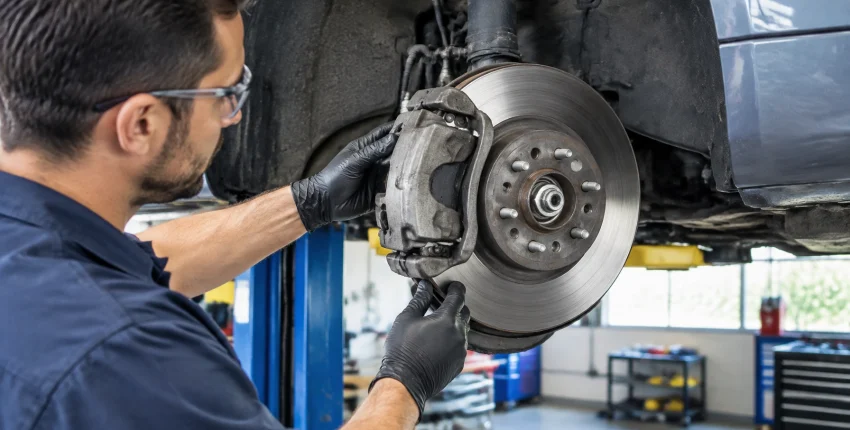
We inspect the rotor surface for grooves, hot spots, cracks, corrosion, and uneven wear. When needed, we measure rotor thickness and runout to determine whether the rotor is within the vehicle manufacturer’s specifications.
A rotor that is below its minimum safe thickness should not simply be resurfaced. In that case, replacement is the safer option.
Calipers and guide pins
We check whether the caliper piston and slide pins move as intended. A brake caliper that does not release correctly can overheat new pads and rotors, so this step is essential.
Brake fluid and hydraulic components
We look for leaks, check the fluid condition, and pay attention to pedal feel. A soft or sinking pedal may indicate air, moisture, a hydraulic leak, or another issue that requires attention.
Tires, wheels, and suspension
If the symptoms do not clearly point to the brakes, we inspect the tire tread, wheel condition, wheel bearings, and relevant steering and suspension components. The goal is to avoid replacing brake parts that will not solve the problem.

What repair might fix the shaking?
The correct repair depends on the inspection results. Common solutions include replacing brake pads and rotors on the affected axle, servicing or replacing a sticking caliper, cleaning and lubricating the pad hardware, or correcting a tire, wheel, alignment, or suspension issue.
In some cases, a rotor may have enough thickness remaining to be resurfaced safely. In others, replacement provides a better long-term result. We explain the difference and show you what we found before moving forward.
You should also be cautious about replacing only one brake pad or one rotor on an axle without a clear reason. Brakes work as a system, and components on the same axle generally need to provide balanced friction and stopping performance.
Is it safe to keep driving when the car shakes during braking?
A mild vibration does not always mean your brakes are about to fail, but it should not be ignored. Brake vibration can worsen, increase stopping distances, damage related components, or make the vehicle less predictable during an emergency stop.
If you notice grinding, a strong burning smell, a brake pedal that feels soft, a vehicle that pulls sharply, fluid leaking near a wheel, or a brake warning light, avoid unnecessary driving and contact a repair professional.
Even if the shaking is slight, scheduling a brake inspection early may help you address a smaller problem before it becomes a more expensive one.
Honest brake repair in Aliso Viejo
At Aliso Viejo Auto Service, we know that brake concerns can be stressful: especially when you are not sure what the symptoms mean or what a repair should cost. Our ASE-certified technicians inspect the vehicle carefully and explain your options without unnecessary pressure.
We provide complete auto repair and maintenance services for most makes and models, with same-day service available for many repairs. Qualifying repairs are backed by our 24-month/24,000-mile warranty on parts and labor, giving you added peace of mind after you leave the shop.
A shaking car when braking is your vehicle asking for attention. The safest next step is to have the cause identified rather than guessing based on the symptom alone.
Contact Aliso Viejo Auto Service to schedule a brake inspection. We’ll help you understand what your car needs, what can wait, and what should be handled now so you can drive around Aliso Viejo with confidence.