Few things cause a driver’s heart to sink faster than a transmission warning light or the sudden sensation of a gear slipping while driving down Aliso Creek Road. It’s one of those “big” car repairs that everyone dreads. You start wondering if your car is about to become a very expensive paperweight or if there is a way to fix it without draining your savings.
The good news is that a transmission problem doesn’t always mean you need a brand-new unit. In fact, many issues can be resolved with targeted repairs. However, there comes a point where the cost of fixing an old transmission exceeds its value. Deciding between a repair, a rebuild, or a full replacement is a big choice, and getting it right depends on the specific symptoms your car is showing, the age of the vehicle, and your long-term plans.
At Aliso Viejo Auto Service, we believe in honest communication. We want you to feel informed so you can make the best decision for your family’s budget and safety.
Recognizing the Early Warning Signs
Before we get into the “fix vs. replace” debate, it’s important to know what your car is trying to tell you. Catching a problem early is often the difference between a minor transmission repair in Aliso Viejo and a complete overhaul.
If you notice any of these symptoms, it’s time to have a professional take a look:
- Slipping Gears: You’re driving along and the engine suddenly revs high, but the car doesn’t speed up. It feels like the car “pops” out of gear or struggles to find the right one.
- Rough Shifting: Instead of smooth transitions, you feel a noticeable “clunk” or a hard jar when the car changes gears.
- Delayed Engagement: You shift from Park into Drive, but there’s a multi-second pause before the car actually starts moving.
- Odd Noises: Whining, buzzing, or humming sounds while driving: or a loud “clunk” when shifting: are rarely good signs.
- The “Burning” Smell: Transmission fluid is supposed to smell slightly sweet or tart, but never burnt. If it smells like something is scorching, your transmission is likely overheating.
If you’re seeing red puddles on your driveway, don’t ignore them. Transmission fluid is typically bright red; if it turns dark brown or black, it’s a sign that the internal components are wearing down.
Understanding Your Options: Repair, Rebuild, or Replace?
When you bring your vehicle in for a diagnostic, we look at the internal and external health of the unit. Generally, your options will fall into one of three categories.
1. Transmission Repair
This is the most targeted and cost-effective option. We use the term “repair” when the problem is localized. For instance, you might have a faulty sensor, a broken solenoid, or a simple leak in an external seal. In these cases, we don’t need to take the whole transmission apart. We fix the specific component, change the fluid, and get you back on the road.
2. Transmission Rebuild
A rebuild is a more “middle-ground” solution. Our ASE-certified technicians remove the transmission, take it apart, and inspect every single piece. We replace the parts that are worn out: like seals, gaskets, and clutch bands: but we keep the main “shell” or case of the transmission. It’s a great way to extend the life of your car without the high cost of a brand-new factory unit.
3. Transmission Replacement
Sometimes, the damage is just too severe. If the internal gears are shredded or the case is cracked, a rebuild isn’t safe or cost-effective. In this scenario, we replace your entire transmission with another unit. This could be a “remanufactured” unit, which is essentially a transmission that has been rebuilt in a factory setting to original specifications, often including upgrades to fix known factory flaws.

Factors to Consider When Making Your Choice
So, how do you choose? It isn’t just about the lowest price today; it’s about the value over the next few years.
The Age and Mileage of Your Vehicle
If your car has 180,000 miles and the transmission finally gives out, a $5,000 replacement might not make sense if the car itself is only worth $4,000. On the other hand, if you have a newer vehicle with 60,000 miles, investing in a high-quality repair or rebuild is almost always the smarter move compared to buying a new car.
Your Future Plans
Are you planning to hand this car down to your teenager next year? Or are you just trying to make it through the next six months before trading it in? If you’re keeping the car for the long haul, a remanufactured replacement often comes with a much longer warranty, giving you peace of mind for years to come.
The Cost of the Job
We always recommend looking at the “50% rule.” If the cost of the transmission repair is more than half the value of the car, it might be time to consider a different vehicle. However, for most modern cars in good condition, a professional transmission repair Aliso Viejo drivers can trust is still far cheaper than a years-long car payment.
Why Quality Workmanship Matters
The transmission is arguably the most complex part of your vehicle. It relies on a delicate balance of hydraulics, computer sensors, and heavy-duty gears. This isn’t a job for a “hobbyist” or a shop that doesn’t specialize in complex systems.
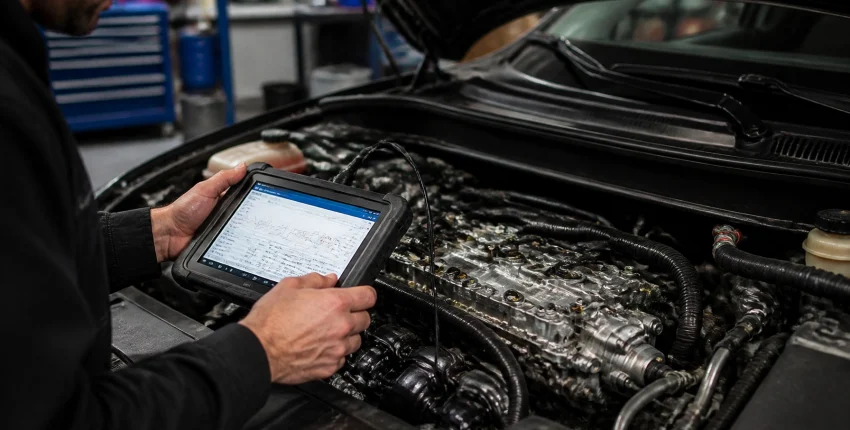
When you bring your car to us, you’re getting the expertise of technicians trained by ATI, WTI, and AAPEX. We don’t just “guess” at what’s wrong. We use advanced diagnostics to find the root cause, whether it’s a simple electrical glitch or a major mechanical failure. Because we value our neighbors in Aliso Viejo, we stand behind our work with a 3-year / 36,000-mile warranty. We want you to drive away knowing the job was done right the first time.
Preventing Future Transmission Headaches
The best way to deal with a transmission replacement is to never need one in the first place. Many of the major failures we see could have been prevented with simple, regular maintenance.
- Fluid Changes: Just like your engine oil, transmission fluid breaks down over time. It loses its ability to lubricate and cool the gears. Check your owner’s manual for the recommended interval: usually every 30,000 to 60,000 miles.
- Don’t Ignore Leaks: A small leak leads to low fluid, and low fluid leads to friction and heat. Heat is the number one killer of transmissions.
- Proper Shifting: Always come to a complete stop before shifting from Drive to Reverse. Slamming it into gear while the car is still rolling puts immense stress on the internal components.
For more on how to keep your car running smoothly, you might find our guide on why transmission repair and preventative maintenance go hand-in-hand helpful. You can also check out resources like Consumer Reports for general tips on avoiding expensive repairs.
Trust the Experts in Aliso Viejo
Deciding how to handle a failing transmission is stressful, but you don’t have to figure it out alone. Our goal is to provide you with the same dealership-quality service you’d expect, but with the honest, fair pricing of a local shop that has served this community for over 30 years.
We’ll walk you through the diagnostic results, show you exactly what’s happening inside your vehicle, and give you a straight answer on whether a repair or a replacement is your best path forward. We offer same-day service for most minor repairs and convenient drop-off options to keep your life moving.
If you’re worried about how your car is shifting, don’t wait for it to leave you stranded. Stop by Aliso Viejo Auto Service today or give us a call to schedule a transmission health check. Let’s make sure your car stays reliable for all the miles ahead.